
What Is Commercial Site Development
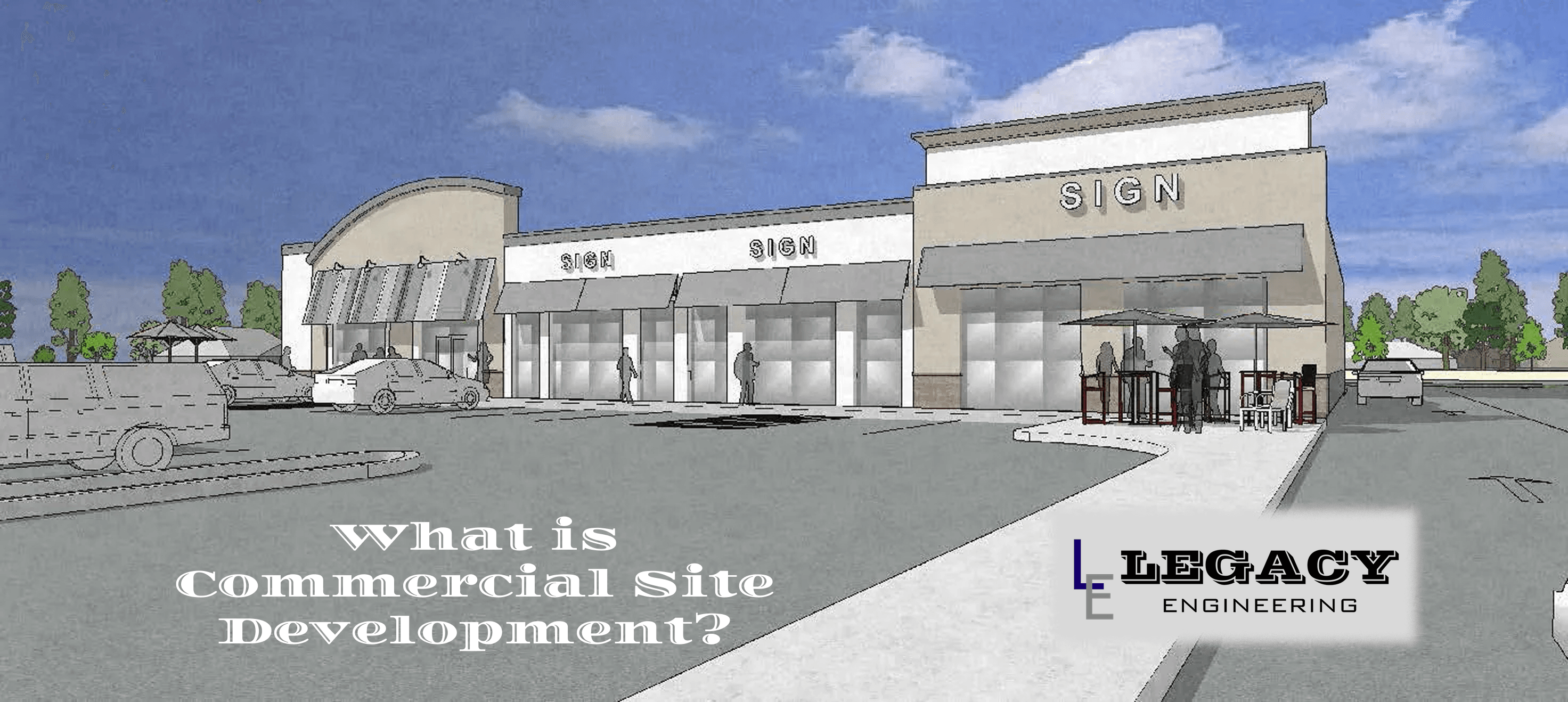
Commercial site development is the engineered design of everything outside the building—from grading, drainage, parking, and utilities to permit-ready site layouts—ensuring your project meets all city requirements across Lubbock, Amarillo, Midland, and Odessa.
Commercial site development is the process of preparing land so a business can build a safe, functional, and code-compliant commercial facility. This typically happens in one of two scenarios:
1. A business needs a new office or shop.
A company owns or purchases land and wants to construct a new commercial building.
2. A developer is creating a commercial office park.
Multiple commercial lots are platted, and each future tenant or buyer constructs their own building.
While architects focus on the building itself, civil engineers design everything outside the building—grading, drainage, utilities, parking, drive aisles, and compliance with local city, county, and state standards.
Why Are Civil Engineers Involved?
Because municipalities across West Texas — including Lubbock, Amarillo, Midland, Odessa, and surrounding communities — require engineered civil plans for nearly all commercial building permits.
Cities don’t issue commercial building permits unless the applicant provides:
- An architectural plan set
- A civil engineering plan set
- A Mechanical, Electrical, and Plumbing (MEP) plan set
Civil engineers are considered the experts for site layout and site functionality. Our plans govern everything from the back of curb to the building foundation, including:
Parking layout & counts (including required ADA spaces)
- ADA-compliant accessible routes
- Driveways and entrance geometry
- Site grading and earthwork
- Drainage analysis and stormwater compliance
- Water & sewer connections
- Fire lane requirements
- Utility coordination with local providers
For many West Texas cities, the drainage report and grading plan are the most heavily reviewed components. Ensuring your site drains correctly—and does not impact neighboring properties—is essential for both safety and permitting approval.
Legacy Engineering specializes in navigating these local requirements so your project avoids delays and unexpected redesigns.
The Building Permit Process (Simplified)
Most West Texas municipalities follow a similar permitting workflow:
Submit architectural, civil, and MEP plans
City departments review for code compliance
Comments are issued (zoning, drainage, fire, engineering, utilities, etc.)
Your engineer revises plans and resubmits
Once all comments are satisfied, the building permit is issued
Civil plans make up a large portion of these reviews, which is why working with a civil engineer who understands local codes, drainage requirements, parking standards, and fire access rules is critical.
Legacy Engineering designs with permit approval in mind, minimizing rework and ensuring your site moves quickly through review.
What to Expect in Your Civil Plan Set
A typical commercial site (up to ~1 acre) requires a five-page civil plan set, though larger or more complex sites may require more.
When you receive civil plans from Legacy Engineering, you can expect:
1. Existing Topographic Survey (Existing Topo)
Shows existing ground elevations, utilities, drainage patterns, and features.
This is the baseline for grading, drainage, and site layout.
2. Site Plan
Defines the “big picture” layout of the site, including:
- Building footprint
- Parking layout & stall counts
- ADA spaces and routes
- Sidewalks & fire lanes
- Driveways and connection to public streets
- Dumpster location & screening
- Landscape reserve areas (if required)
3. Grading Plan
Maps out how the site will drain after development.
Includes:
- Proposed contours and spot elevations
- Flow arrows and drainage paths
- Detention or on-site stormwater measures (if required)
- Tie-ins to adjacent properties and public right-of-way
This is one of the most scrutinized sheets in West Texas jurisdictions.
4. Utility Plan
Shows the layout of:
- Domestic water
- Fire water lines and hydrants (if applicable)
- Sanitary sewer services
- Private and franchise utilities (gas, electric, telecom, fiber)
This plan also ensures proper separation clearances required by city and state rules.
5. Standard Construction Details
These sheets provide the technical specifications for:
- Pavement sections
- Sidewalk and ADA ramp details
- Water and sewer installation
Connection standards for specific cities (Lubbock, Odessa, Midland, Amarillo, etc.)
Jurisdictions often require city-specific details, and Legacy Engineering incorporates the correct standards for each municipality.
Why Choose Legacy Engineering for Commercial Site Development?
Legacy Engineering is a civil engineering firm based in Lubbock, Texas, serving all of West Texas — Amarillo, Midland, Odessa, the Permian Basin, the South Plains, and surrounding regions.
We specialize in fast-moving commercial projects, including:
- Retail buildings
- Office buildings
- Warehouse & light industrial shops
- Medical clinics
- Restaurants & drive-through concepts
- Commercial multi-lot developments
Our team pairs technical expertise with local permitting knowledge, helping developers and business owners avoid delays and unnecessary redesigns.
What sets us apart?
- Deep understanding of local drainage and grading requirements
- Fast turnaround times
- Clear communication with municipalities
- Practical, constructible designs
- Familiarity with permitting processes across West Texas cities
If you’re planning a commercial development in Lubbock, Amarillo, Midland, Odessa, Wolfforth, Canyon, or anywhere in the region, Legacy Engineering can guide your project from concept to construction.