
Civil Engineering vs Surveying vs Architecture: Who Does What?
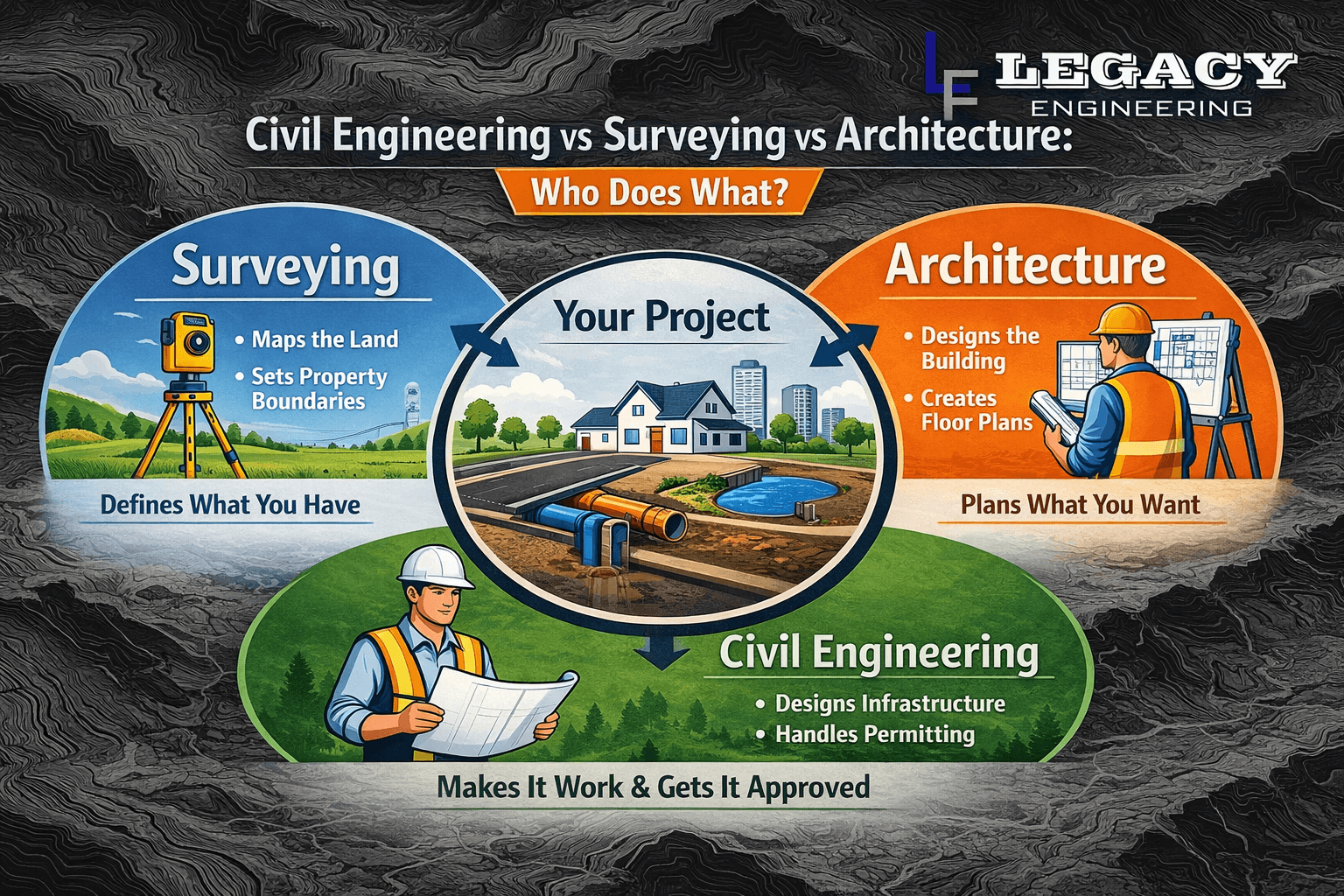
Not sure whether you need a civil engineer, surveyor, or architect? Knowing who does what can make or break your project.
When starting a construction or land development project, many property owners and developers ask the same question:
“Do I need a civil engineer, a surveyor, or an architect?”
The answer is often yes — but not all at the same time, and not for the same reasons. Each profession plays a distinct role, and understanding those roles early can save time, money, and redesign later in the process.
How These Roles Work Together
A simple way to think about it:
- Surveyors define what exists on the land
- Architects design the building and spaces people will use
- Civil engineers design the infrastructure that makes development possible
All three are important, but they solve very different problems.
The Role of a Surveyor
A land surveyor focuses on measuring and documenting existing conditions. This includes property boundaries, easements, right-of-way, and topography. Their work establishes the legal and physical framework that all other design relies on.
Surveyors are typically needed at the very beginning of a project — before design starts — to ensure everyone is working from accurate information. While survey data is critical, surveyors do not design drainage systems, roads, or utilities, nor do they manage development permitting.
In short, surveying defines the land, but it does not determine how it should be developed.
The Role of an Architect
Architects focus on building design and user experience. They design floor plans, building layouts, and exterior aesthetics, while also addressing life-safety requirements such as accessibility and egress.
Architectural design is essential for commercial, multifamily, and complex residential projects. However, architects generally rely on civil engineers to determine where buildings can go on a site based on grading, drainage, utilities, and code requirements.
Architects design the structure — not the land or infrastructure supporting it.
The Role of a Civil Engineer
Civil engineers design the systems that allow land to be developed legally, safely, and efficiently. This includes grading, drainage, roadways, utilities, subdivision layout, and stormwater management.
Civil engineers also play a key role in permitting and city coordination, ensuring that plans comply with local, state, and federal regulations. In many cases, civil engineering constraints — such as drainage requirements or access standards — ultimately control what can be built and where.
Because of this, civil engineering often drives the feasibility and success of a project long before construction begins.
Who Should You Contact First?
One of the most common (and costly) mistakes is starting design in the wrong order.
In most land development projects, the typical sequence is:
- Survey to establish boundaries and topography
- Civil engineering to evaluate feasibility and infrastructure
- Architectural design that fits the engineered site
Starting architectural design before civil engineering often leads to redesign, delays, and unexpected costs when plans don’t meet site or city requirements.
Do All Projects Need All Three?
Not necessarily. Smaller projects may only require a survey and civil engineering, while building remodels may only require architectural services. Larger developments, subdivisions, and commercial projects typically require all three disciplines working together.
The key is understanding project scope, risk, and permitting requirements — something a civil engineer can help evaluate early on.
Conclusion: Why Civil Engineering Is Often the Foundation
Surveyors, architects, and civil engineers each play a vital role, but civil engineering is often the backbone of a successful development project. From feasibility and layout to permitting and construction coordination, civil engineers ensure that a project can move forward without costly surprises.
If you’re planning a development, subdivision, or site improvement and aren’t sure where to start, Legacy Engineering is here to help. Our team provides comprehensive civil engineering services designed to move projects efficiently from concept to construction while meeting all regulatory requirements.
Contact Legacy Engineering today for all your civil engineering needs, and let us help you start your project on the right foundation.